
Already eaten — what now?
For dogs and cats
Urgent help neededRemove the rest. After one tiny piece with no signs, observe your pet. If more than a taste was eaten, the amount is unknown, or exposure was repeated, call a veterinarian promptly. Report your pet’s weight, the form of aveluk, the dish ingredients, the time and the possible amount. Repeated vomiting, marked weakness, unsteadiness, tremors, seizures, an abnormal heart rhythm or a noticeable change in urination need emergency care. Do not induce vomiting or give home remedies unless a veterinarian tells you to.
Variants and ingredients
Fresh leaves and stemsFor dogs and cats: Dangerous · Urgent help needed
Fresh curly dock before drying.
For dogs and cats
Conditions and restrictions
Do not let a pet chew the plant. Remove cut leaves and wild Rumex from areas your pet can reach.
Benefits
Aveluk is used in human cooking, but it offers dogs and cats no benefit that justifies exposure to soluble oxalates.
Risks
- A small amount may cause vomiting, reduced appetite or other gastrointestinal upset.
- A large or repeated intake of soluble oxalates can lower blood calcium and cause weakness, poor coordination, tremors, seizures or an abnormal heart rhythm.
- Calcium oxalate crystals can injure the kidney tubules; risk depends on the amount and whether exposure is repeated.
Already eaten — what now?
Remove the rest. After one tiny piece with no signs, observe your pet. If more than a taste was eaten, the amount is unknown, or exposure was repeated, call a veterinarian promptly. Report your pet’s weight, the form of aveluk, the dish ingredients, the time and the possible amount. Repeated vomiting, marked weakness, unsteadiness, tremors, seizures, an abnormal heart rhythm or a noticeable change in urination need emergency care. Do not induce vomiting or give home remedies unless a veterinarian tells you to.
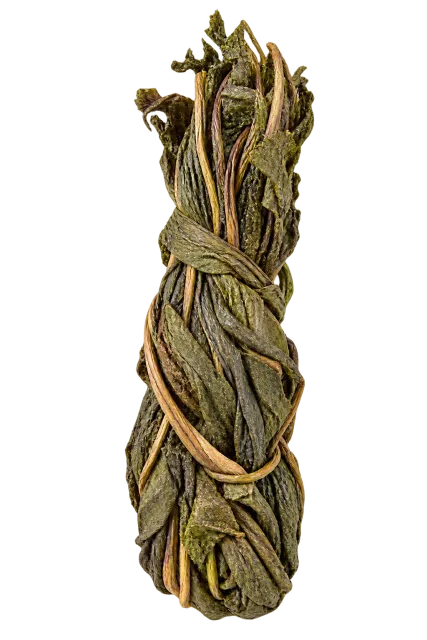
Dried aveluk braidFor dogs and cats: Dangerous · Urgent help needed
Dried Rumex crispus leaves and stems with no other ingredients.
For dogs and cats
Conditions and restrictions
Do not feed fresh, dried or cooked aveluk. Keep dried braids and prepared dishes out of your pet’s reach.
Benefits
Aveluk is used in human cooking, but it offers dogs and cats no benefit that justifies exposure to soluble oxalates.
Risks
- Drying does not establish safety or a known safe serving for dogs or cats.
- A dried braid can be eaten unnoticed, and its volume is difficult to judge after ingestion.
- A small amount may cause vomiting, reduced appetite or other gastrointestinal upset.
- A large or repeated intake of soluble oxalates can lower blood calcium and cause weakness, poor coordination, tremors, seizures or an abnormal heart rhythm.
- Calcium oxalate crystals can injure the kidney tubules; risk depends on the amount and whether exposure is repeated.
Already eaten — what now?
Remove the rest. After one tiny piece with no signs, observe your pet. If more than a taste was eaten, the amount is unknown, or exposure was repeated, call a veterinarian promptly. Report your pet’s weight, the form of aveluk, the dish ingredients, the time and the possible amount. Repeated vomiting, marked weakness, unsteadiness, tremors, seizures, an abnormal heart rhythm or a noticeable change in urination need emergency care. Do not induce vomiting or give home remedies unless a veterinarian tells you to.
Plain boiled avelukFor dogs and cats: Dangerous · Urgent help needed
Aveluk boiled in water and drained, with no onion, garlic, salt or oil.
For dogs and cats
Conditions and restrictions
Boiling and discarding the water can reduce soluble oxalates, but no safe serving of cooked aveluk has been established for dogs or cats. Do not offer it to a pet.
Benefits
Aveluk is used in human cooking, but it offers dogs and cats no benefit that justifies exposure to soluble oxalates.
Risks
- Some oxalate can remain after cooking.
- Salt, fat and other ingredients in the finished dish add separate risks.
Already eaten — what now?
Remove the rest. After one tiny piece with no signs, observe your pet. If more than a taste was eaten, the amount is unknown, or exposure was repeated, call a veterinarian promptly. Report your pet’s weight, the form of aveluk, the dish ingredients, the time and the possible amount. Repeated vomiting, marked weakness, unsteadiness, tremors, seizures, an abnormal heart rhythm or a noticeable change in urination need emergency care. Do not induce vomiting or give home remedies unless a veterinarian tells you to.
Dish with onion or garlicFor dogs and cats: Dangerous · Urgent help needed
Aveluk soup, salad or another dish containing onion, garlic or their powder.
For dogs and cats
Conditions and restrictions
Do not feed dishes containing onion, garlic, their powders or unknown seasoning. Keep the recipe or packaging.
Benefits
Aveluk is used in human cooking, but it offers dogs and cats no benefit that justifies exposure to soluble oxalates.
Already eaten — what now?
Contact a veterinarian immediately and report the ingredients, possible amount, time and your pet’s weight. Do not wait for signs of anaemia because they may be delayed. Weakness, pale gums, rapid breathing, dark urine, jaundice, tremors or seizures need emergency care. Do not induce vomiting yourself.
For dogs
Risks
- Onion and garlic damage red blood cells and can cause haemolytic anaemia.
- Signs of anaemia may be delayed for several days and include weakness, pale gums, rapid breathing, dark urine or jaundice.
- A small amount may cause vomiting, reduced appetite or other gastrointestinal upset.
- A large or repeated intake of soluble oxalates can lower blood calcium and cause weakness, poor coordination, tremors, seizures or an abnormal heart rhythm.
- Calcium oxalate crystals can injure the kidney tubules; risk depends on the amount and whether exposure is repeated.
For cats
Risks
- Cats are especially susceptible to red blood cell damage from onion and garlic.
- Signs of anaemia may be delayed for several days and include weakness, pale gums, rapid breathing, dark urine or jaundice.
- A small amount may cause vomiting, reduced appetite or other gastrointestinal upset.
- A large or repeated intake of soluble oxalates can lower blood calcium and cause weakness, poor coordination, tremors, seizures or an abnormal heart rhythm.
- Calcium oxalate crystals can injure the kidney tubules; risk depends on the amount and whether exposure is repeated.
Conditions and risks
For dogs and cats
Conditions and restrictions
Do not feed fresh, dried or cooked aveluk. Keep dried braids and prepared dishes out of your pet’s reach.
Benefits
Aveluk is used in human cooking, but it offers dogs and cats no benefit that justifies exposure to soluble oxalates.
Risks
- A small amount may cause vomiting, reduced appetite or other gastrointestinal upset.
- A large or repeated intake of soluble oxalates can lower blood calcium and cause weakness, poor coordination, tremors, seizures or an abnormal heart rhythm.
- Calcium oxalate crystals can injure the kidney tubules; risk depends on the amount and whether exposure is repeated.
Here, aveluk means the young leaves and stems of curly dock (Rumex crispus) that are traditionally braided, dried and later cooked in Armenia. The everyday name is sometimes used more broadly, so photograph the plant or keep the packaging after an accidental ingestion. A different Rumex species or a prepared dish must be assessed from its exact ingredients.
Sources
- Medical Science of Armenia: analysis of Rumex crispus (ավելուկ գանգուր)
- Merck Veterinary Manual: Toxicity of Plants Containing Soluble Oxalates
- ASPCA: Sorrel (Rumex scutatus)
- Panciera et al.: Acute oxalate poisoning attributable to Rumex crispus in sheep
- Horgan et al.: Oxalic acid in Rumex crispus leaves
- Chai and Liebman: Effect of cooking methods on vegetable oxalate content
- Merck Veterinary Manual: Garlic and Onion Toxicosis in Animals
Comments
No comments yet.