
Can I give it?
For dogs and cats: Only as prescribed by a veterinarian
Conditions and risksAlready eaten — what now?Check the variant (3)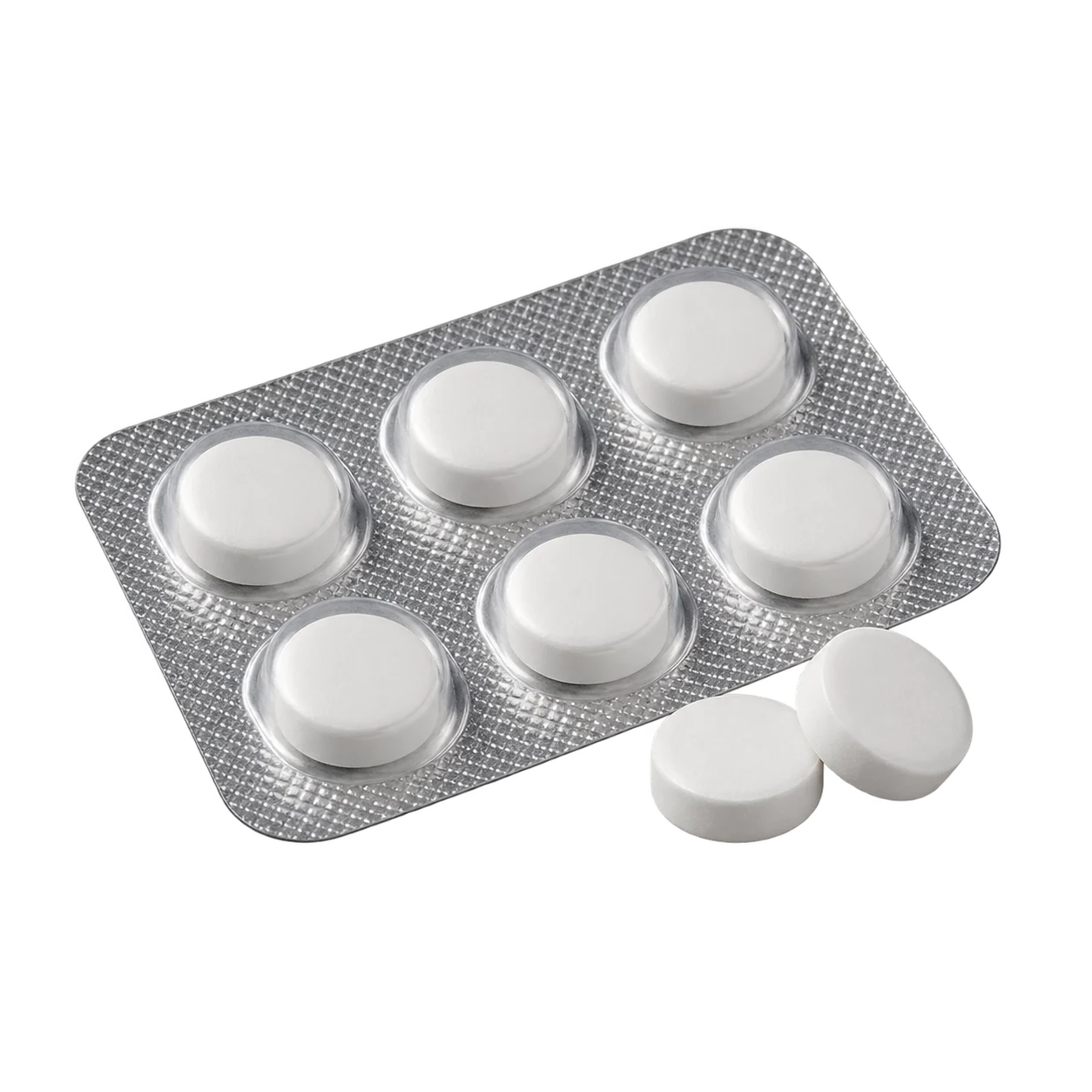
Already eaten — what now?
For dogs and cats
Urgent help neededIf your pet accidentally swallowed metamizole, received an extra dose or the amount is unknown, call a veterinarian promptly. Read the exact ingredients and strength from the package and report your pet's weight, the time and the possible amount. Go straight to an open clinic if there is weakness, repeated vomiting, loss of coordination, seizures, difficulty breathing or any deterioration. Do not induce vomiting or give another medicine unless a veterinarian tells you to.
Variants and ingredients
Single-ingredient tabletsFor dogs and cats: With restrictions · Urgent help neededFor dogs and cats: Only as prescribed by a veterinarian
Check that metamizole is the only active ingredient and read the amount in each tablet. Tablets that look alike may have different strengths.
For dogs and cats
Already eaten — what now?
If your pet accidentally swallowed metamizole, received an extra dose or the amount is unknown, call a veterinarian promptly. Read the exact ingredients and strength from the package and report your pet's weight, the time and the possible amount. Go straight to an open clinic if there is weakness, repeated vomiting, loss of coordination, seizures, difficulty breathing or any deterioration. Do not induce vomiting or give another medicine unless a veterinarian tells you to.
For dogs
Conditions and restrictions
Only if a veterinarian prescribed these exact tablets and explained the schedule. Do not apply the instructions to a product with a different strength.
Benefits
May reduce acute pain and fever and relieve smooth muscle spasm as part of a plan chosen by a veterinarian. It may be inadequate as the only pain medicine.
Risks
- Vomiting, salivation and other adverse reactions may occur.
- Longer or repeated treatment in dogs has been associated with red blood cell changes and lower haemoglobin, which matters especially in dogs with anaemia or serious concurrent disease.
- Combining metamizole with other pain medicines, glucocorticoids or certain other drugs may increase the risk of adverse effects.
For cats
Conditions and restrictions
Only if a veterinarian prescribed this exact formulation and explained the schedule. Do not split a human tablet by eye or apply the instructions to another package.
Benefits
A veterinarian may include metamizole in a pain control plan. Evidence in cats is limited, and metamizole alone may not provide adequate analgesia.
Risks
- Salivation and vomiting have been observed in studies of metamizole in cats; frequency differed by route and study.
- Safety data come from small groups of mostly healthy cats treated for short periods, so they do not establish the safety of unsupervised or prolonged use.
- Concentration, route, excipients, other active ingredients and concurrent medicines can all change the risk.
Solution for injectionFor dogs and cats: With restrictions · Urgent help neededFor dogs and cats: Only as prescribed by a veterinarian
Solutions come in different concentrations and may contain additional substances. Route and rate of administration affect safety.
For dogs and cats
Already eaten — what now?
If your pet accidentally swallowed metamizole, received an extra dose or the amount is unknown, call a veterinarian promptly. Read the exact ingredients and strength from the package and report your pet's weight, the time and the possible amount. Go straight to an open clinic if there is weakness, repeated vomiting, loss of coordination, seizures, difficulty breathing or any deterioration. Do not induce vomiting or give another medicine unless a veterinarian tells you to.
For dogs
Conditions and restrictions
A veterinarian selects and administers the injectable product. Do not use an ampoule at home without direct instructions and training.
Benefits
May reduce acute pain and fever and relieve smooth muscle spasm as part of a plan chosen by a veterinarian. It may be inadequate as the only pain medicine.
Risks
- Giving an intravenous solution too quickly increases the risk of a severe allergic reaction; injection-site pain may occur.
- A mistake in concentration or volume can cause an overdose.
- Other substances in the solution may have their own contraindications and interactions.
For cats
Conditions and restrictions
For a cat, the veterinarian checks both metamizole and every excipient in the specific solution. Do not inject the medicine yourself.
Benefits
A veterinarian may include metamizole in a pain control plan. Evidence in cats is limited, and metamizole alone may not provide adequate analgesia.
Risks
- Salivation and vomiting have been observed after metamizole administration in cats.
- Some solutions contain excipients that make the particular product unsuitable for cats.
- A mistake in concentration, volume or route can cause an overdose or another severe reaction.
Combination medicinesFor dogs and cats: Insufficient evidence · Urgent help neededFor dogs and cats: Only as prescribed by a veterinarian
A medicine for pain, spasms or cold symptoms may contain metamizole with other active ingredients. The answer depends on the full list of ingredients.
For dogs and cats
Conditions and restrictions
Do not give a combination medicine unless a veterinarian has checked every active ingredient and its amount.
Benefits
Benefit cannot be assessed from the word “Analgin” or “metamizole” alone because the whole formulation determines its effects and restrictions.
Risks
- Another ingredient may be more dangerous than metamizole and may require different urgency or treatment.
- A trade name and the appearance of the package do not reliably identify the ingredients.
Already eaten — what now?
Contact a veterinarian immediately and read the full list of ingredients from the package. Report your pet's weight, the time and the possible amount. If the ingredients are unknown or symptoms appear, arrange urgent transport to a clinic. Do not induce vomiting or give home remedies unless a veterinarian tells you to.
Conditions and risks
For dogs
Conditions and restrictions
Give only the exact product prescribed for your dog. Tell the veterinarian about anaemia, disorders of blood formation, kidney, liver or gastrointestinal disease, and every pain medicine, steroid or other drug your dog receives. Do not substitute a human product for a veterinary one or change the dose yourself.
Benefits
May reduce acute pain and fever and relieve smooth muscle spasm as part of a plan chosen by a veterinarian. It may be inadequate as the only pain medicine.
Risks
- Vomiting, salivation and other adverse reactions may occur.
- Longer or repeated treatment in dogs has been associated with red blood cell changes and lower haemoglobin, which matters especially in dogs with anaemia or serious concurrent disease.
- Combining metamizole with other pain medicines, glucocorticoids or certain other drugs may increase the risk of adverse effects.
For cats
Conditions and restrictions
Give only the exact product, formulation and course chosen by a veterinarian for your cat. Some solutions contain excipients that make the particular product unsuitable for cats. Do not substitute human tablets, drops or ampoules for the prescription.
Benefits
A veterinarian may include metamizole in a pain control plan. Evidence in cats is limited, and metamizole alone may not provide adequate analgesia.
Risks
- Salivation and vomiting have been observed in studies of metamizole in cats; frequency differed by route and study.
- Safety data come from small groups of mostly healthy cats treated for short periods, so they do not establish the safety of unsupervised or prolonged use.
- Concentration, route, excipients, other active ingredients and concurrent medicines can all change the risk.
Analgin is one trade name for metamizole, also called dipyrone. The yellow rating only reflects possible veterinary use under a prescription. It does not make a tablet from the home medicine cabinet suitable for a pet. Products with similar names may differ in strength, excipients and additional active ingredients.
Sources
- EMA Veterinary Medicines: Spasmium comp. product information
- EMA CVMP: Metamizole summary report
- Veterinary Evidence: Postoperative analgesia and side effects of metamizole in dogs and cats
- ISFM: 2022 consensus guidelines on acute pain in cats
- PubMed: Metamizole pharmacokinetics in cats after three routes of administration
- PubMed: Cyclooxygenase inhibition and analgesic efficacy of dipyrone in cats
- PubMed: Oxidative damage of canine erythrocytes after metamizole treatment
- PubMed: Heinz body formation in 13 multimorbid dogs after metamizole
- EMA: Metamizole-containing medicinal products
Comments
No comments yet.