
Already eaten — what now?
For dogs and cats
After one small piece of ordinary sweet almond with no symptoms, observe your pet. Call a veterinarian if many nuts were eaten, the amount is unknown, or your pet coughs, chokes, vomits repeatedly, seems painful or becomes lethargic. Leave for emergency care immediately if breathing is difficult. Do not induce vomiting yourself.
Variants and ingredients
Plain sweet almondFor dogs and cats: With restrictions
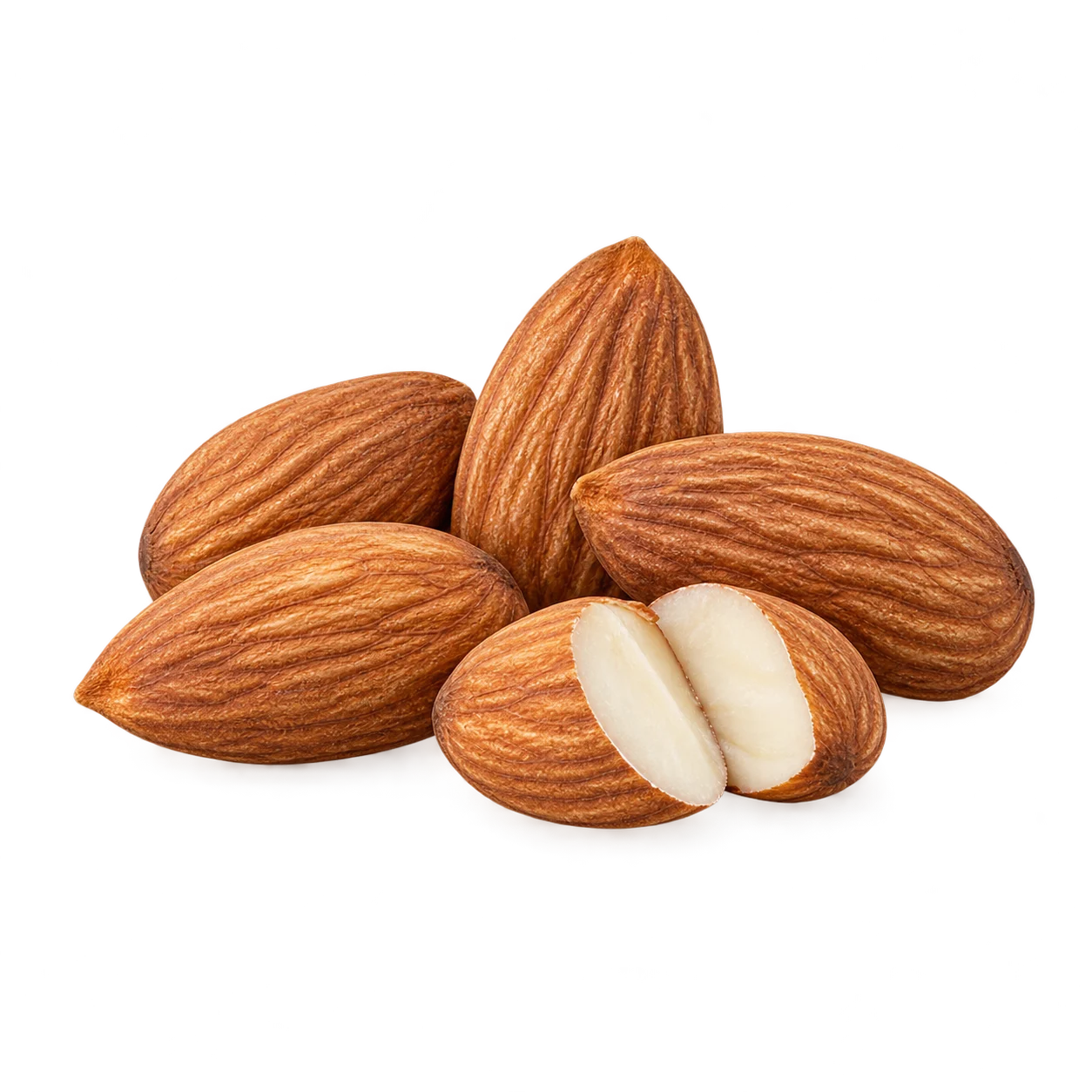
Edible kernels with no shell, salt, seasoning or coating.
For dogs and cats
Benefits
There is no special nutritional benefit: a complete diet already supplies the nutrients a pet needs.
Risks
- The fat may cause vomiting or diarrhoea and can trigger pancreatitis in a susceptible pet.
- A whole hard nut can become a choking hazard or cause an obstruction, especially in a small animal.
Already eaten — what now?
After one small piece of ordinary sweet almond with no symptoms, observe your pet. Call a veterinarian if many nuts were eaten, the amount is unknown, or your pet coughs, chokes, vomits repeatedly, seems painful or becomes lethargic. Leave for emergency care immediately if breathing is difficult. Do not induce vomiting yourself.
For dogs
Conditions and restrictions
Only ordinary sweet almond with no salt, spices, chocolate or sweeteners. If you offer it at all, chop it finely and give a very small amount. Do not offer it without veterinary advice if your dog has pancreatitis, excess weight, a sensitive stomach or a prescribed diet.
For cats
Conditions and restrictions
Only a crumb of ordinary sweet almond with no salt, spices, chocolate or sweeteners. Do not coax a cat to eat nuts. Do not offer it without veterinary advice if your cat has pancreatitis, excess weight, a sensitive stomach or a prescribed diet.
Bitter almondFor dogs and cats: Dangerous · Especially dangerous
Bitter kernels and products made from them that may contain amygdalin.
For dogs and cats
Conditions and restrictions
Do not offer it. Do not try to judge safety by appearance or home processing.
Benefits
There is no benefit for a pet.
Risks
- Amygdalin can release cyanide. Poisoning can progress rapidly, causing breathing difficulty, weakness, bright-red and later blue mucous membranes, seizures, collapse and death.
Already eaten — what now?
After confirmed or possible ingestion, call an open clinic and leave immediately, even if your pet still appears normal. Bring the remaining product and packaging. Do not induce vomiting or give home remedies.
Plain almond butter or milkFor dogs and cats: With restrictions
A product with a clear, simple recipe and no hazardous sweeteners or additives.
For dogs and cats
Conditions and restrictions
Only a plain product with no xylitol, chocolate, macadamia, raisins, large amount of salt or other hazardous additives. Offer no more than a small taste; almond milk does not replace water or regular food.
Benefits
There is no special nutritional benefit: a complete diet already supplies the nutrients a pet needs.
Risks
- Fat, sugar and thickeners may cause digestive upset; recipes vary widely between products.
Already eaten — what now?
After a small amount of a plain product with no symptoms, observe your pet. Check the full ingredient list immediately. If it contains xylitol, chocolate or another hazardous ingredient, the amount is unknown, or symptoms develop, call a veterinarian and keep the packaging.
Product with xylitol or chocolateFor dogs: Dangerous · Especially dangerousFor cats: Dangerous · Urgent help needed
Nut butter, drink, confectionery, baked goods or another mixed product.
For dogs and cats
Benefits
There is no benefit for a pet.
For dogs
Conditions and restrictions
Do not offer products containing xylitol or chocolate. Xylitol may also be listed as birch sugar or wood sugar.
Risks
- Xylitol can quickly cause a dangerous fall in blood sugar, seizures and liver injury.
- Chocolate adds the risks from theobromine and caffeine.
Already eaten — what now?
Call an open clinic and leave immediately. Give the dog’s weight, product name, ingredients, possible amount and time. Do not wait for symptoms or induce vomiting yourself.
For cats
Conditions and restrictions
Do not offer products containing chocolate or with an unknown complex recipe. Xylitol is not considered the same established risk in cats as it is in dogs, but the whole ingredient list still needs assessment.
Risks
- Chocolate contains theobromine and caffeine; other added ingredients can also change the risk.
Already eaten — what now?
Call a veterinarian immediately with the packaging, ingredients, cat’s weight, possible amount and time. Leave at once for weakness, tremors, poor coordination, seizures, collapse or difficult breathing. Do not induce vomiting yourself.
Conditions and risks
For dogs and cats
Benefits
There is no special nutritional benefit: a complete diet already supplies the nutrients a pet needs.
Risks
- The fat may cause vomiting or diarrhoea and can trigger pancreatitis in a susceptible pet.
- A whole hard nut can become a choking hazard or cause an obstruction, especially in a small animal.
For dogs
Conditions and restrictions
Only ordinary sweet almond with no salt, spices, chocolate or sweeteners. If you offer it at all, chop it finely and give a very small amount. Do not offer it without veterinary advice if your dog has pancreatitis, excess weight, a sensitive stomach or a prescribed diet.
For cats
Conditions and restrictions
Only a crumb of ordinary sweet almond with no salt, spices, chocolate or sweeteners. Do not coax a cat to eat nuts. Do not offer it without veterinary advice if your cat has pancreatitis, excess weight, a sensitive stomach or a prescribed diet.
This card covers edible almond kernels and almond-based foods. Ordinary sweet almonds sold as food are not considered toxic, but their high fat content, hard shape and added ingredients change the risk. Bitter almonds need a separate assessment because their amygdalin can release cyanide.
Sources
- ASPCA Animal Poison Control: Internet Myths and Rumors, Almonds
- ASPCA Animal Poison Control: People Foods to Avoid Feeding Your Pets
- FDA staff publication: Cyanide and Amygdalin as Indicators of Bitter Almonds
- Merck Veterinary Manual: Cyanide Poisoning in Animals
- FDA: Paws Off Xylitol; It’s Dangerous for Dogs
- ASPCA Animal Poison Control: Are Dairy Substitutes Safe for My Pet?
- WSAVA Nutrition Committee: Feeding Treats to Your Dog
- WSAVA Nutrition Committee: Feeding Treats to Your Cat
Comments
No comments yet.